H3C Technologies H3C S3100V2 Series Switches User Manual
Page 15
7
Address Description
224.0.0.6
OSPF designated routers/backup designated routers
224.0.0.7
Shared Tree (ST) routers
224.0.0.8 ST
hosts
224.0.0.9
Routing Information Protocol version 2 (RIPv2) routers
224.0.0.11
Mobile agents
224.0.0.12
Dynamic Host Configuration Protocol (DHCP) server/relay agent
224.0.0.13
All Protocol Independent Multicast (PIM) routers
224.0.0.14
Resource Reservation Protocol (RSVP) encapsulation
224.0.0.15
All Core-Based Tree (CBT) routers
224.0.0.16
Designated Subnetwork Bandwidth Management (SBM)
224.0.0.17 All
SBMs
224.0.0.18
Virtual Router Redundancy Protocol (VRRP)
2.
IPv6 multicast addresses
Figure 4 IPv6 multicast format
Group ID (112 bits)
0xFF
Flags
Scope
0
7
11
15
31
The following describes the meanings of the fields of an IPv6 multicast address:
•
0xFF—The most significant eight bits are 11111111, which indicates that this address is an IPv6
multicast address.
•
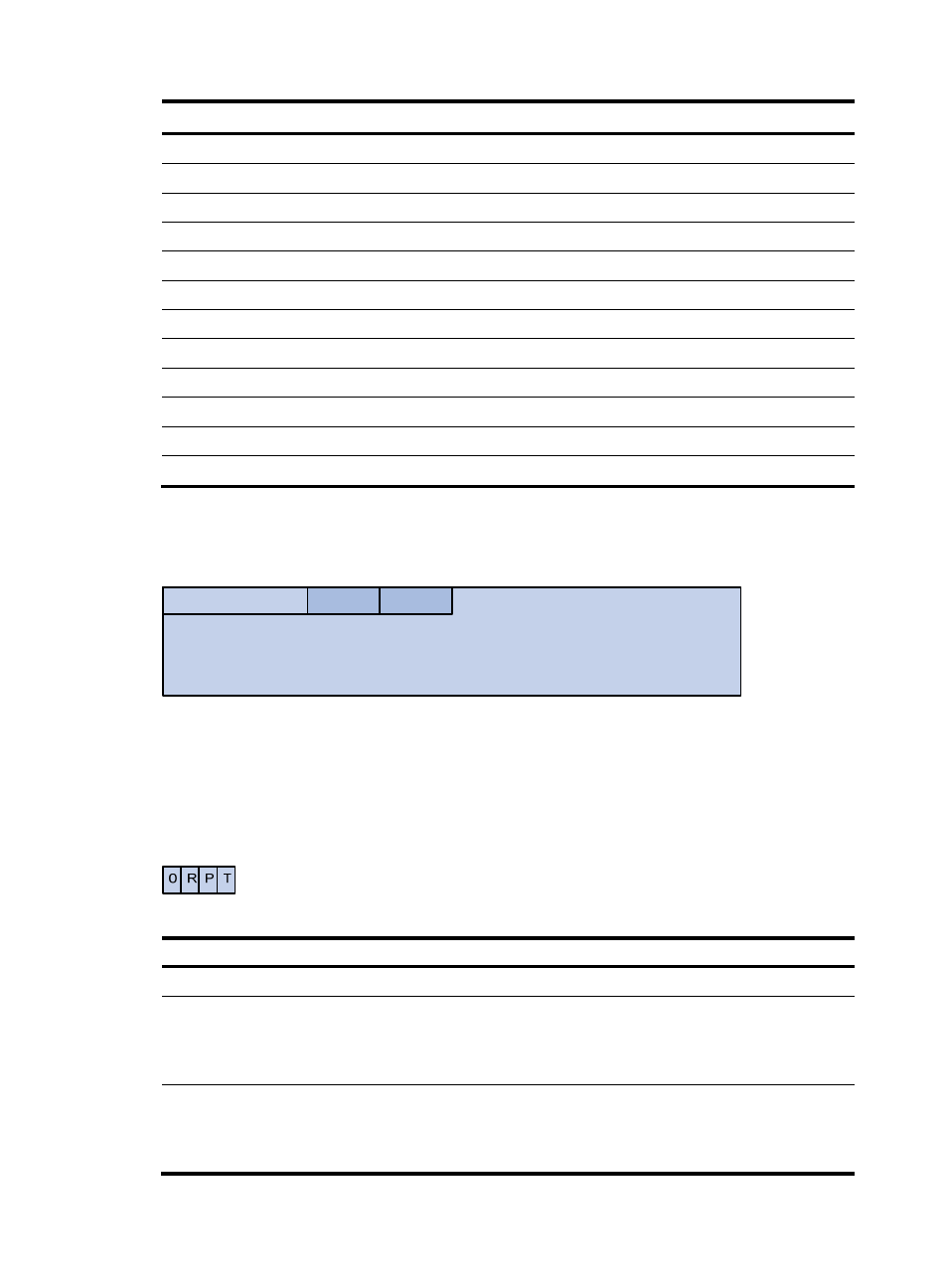
Flags—The Flags field contains four bits.
Figure 5 Format of the Flags field
Table 4 Description on the bits of the Flags field
Bit Description
0
Reserved, set to 0
R
•
When set to 0, it indicates that this address is an IPv6 multicast address without an
embedded RP address.
•
When set to 1, it indicates that this address is an IPv6 multicast address with an embedded
RP address—the P and T bits must also be set to 1.
P
•
When set to 0, it indicates that this address is an IPv6 multicast address not based on a
unicast prefix.
•
When set to 1, it indicates that this address is an IPv6 multicast address based on a unicast
prefix—the T bit must also be set to 1.